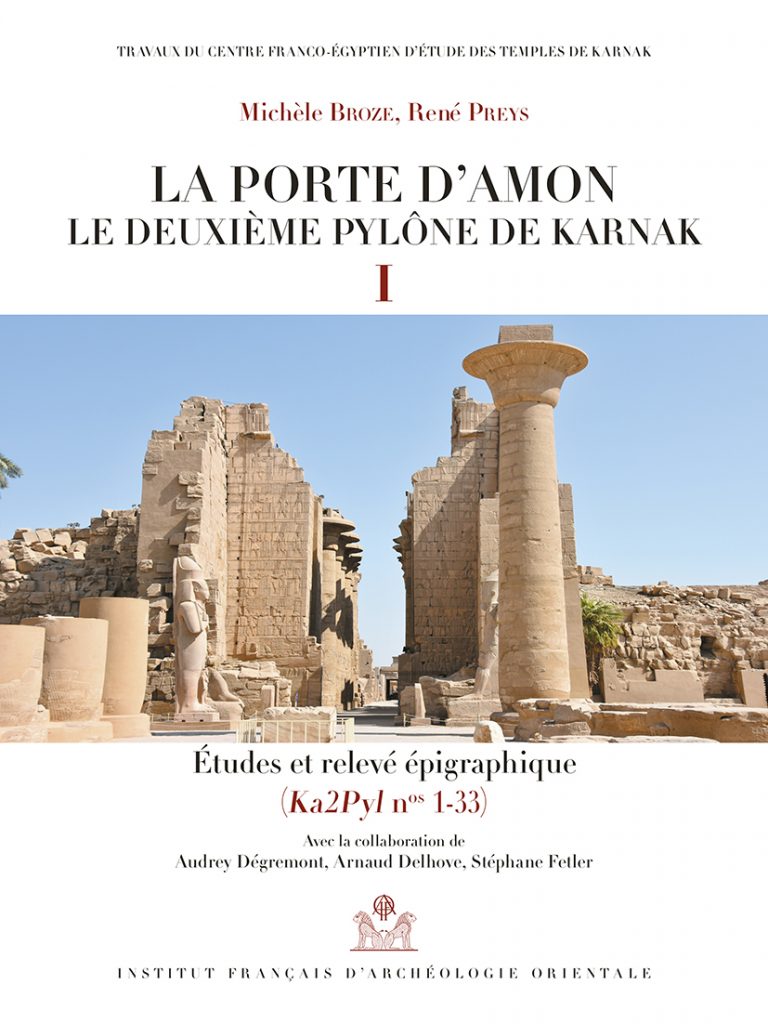
Publication par M. Broze et R. Preys de la la porte d’Amon. Le deuxième pylône de Karnak (TravCFEETK, BiGen 63, 2021)

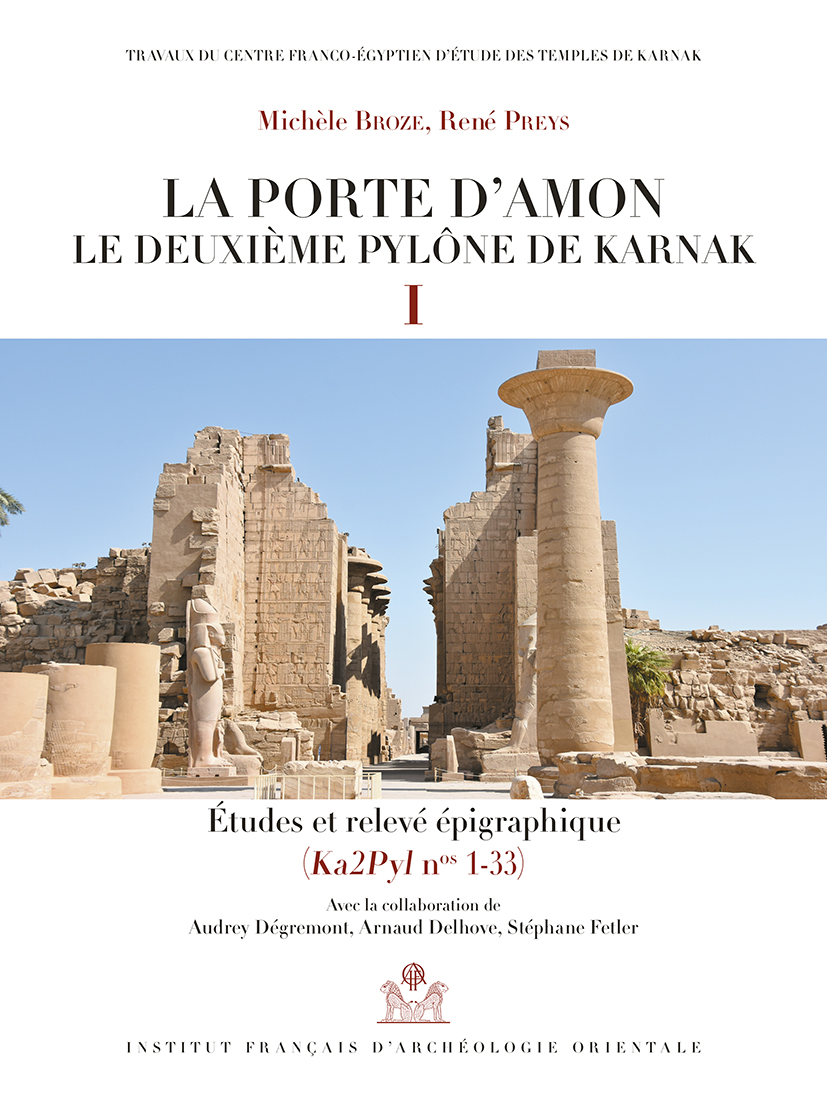
2nd pylône du temple de Karnak - publicationUne nouvelle étude rejoint la série des Travaux du CFEETK  avec la publication de la décoration ptolémaïque de la porte du deuxième pylône du temple de Karnak :

Michèle Broze (†), René Preys, La porte d’Amon. Le deuxième pylône de Karnak I. Études et relevé épigraphique (Ka2Pyln nos 1-33), TravCFEETK, BiGen 63, 2021.


Résumé :

Français :

La porte du deuxième pylône du temple d’Amon constitue une des réalisations les plus monumentales des Ptolémées à Karnak. Construite au début de l’époque ptolémaïque, elle fut décorée sous trois rois successifs. Ptolémée IV Philopator n’eut le temps que d’appliquer son nom sur la porte basse avant que n’éclate la révolte thébaine. Après avoir rétabli l’ordre, Ptolémée VI Philométor décora en un premier temps la façade de la porte de scènes d’offrandes au dieu Amon. Une douzaine d’années plus tard, c’est le passage intérieur de la porte qui fut gravé.

Finalement, Ptolémée VIII Évergète fit graver les textes cosmogoniques du soubassement de la façade. Les textes de la porte décrivent la théologie du dieu Amon dans ses différents aspects. Depuis la création du monde par le dieu, sa ville et son temple sont le modèle sur lequel sont construites les autres villes. Thèbes est le siège du créateur d’où il règne sur le monde. Les scènes décrivent la relation entre Amon et sa parèdre Mout et son fils Khonsou, mais également avec d’autres divinités, telles que Montou, Maât, Isis et Amonet. La décoration définit aussi la relation du dieu Amon avec l’ogdoade et les dieux de Djémé. Textes et images, que nous éditons ici, témoignent de la vitalité de la théologie thébaine à l’époque ptolémaïque, et des pratiques du mythe dans la civilisation égyptienne ancienne.

Anglais :

The gate of the second pylon of the temple of Amun is one of the most monumental achievements of the Ptolemies at Karnak. Built at the beginning of the Ptolemaic period, it was decorated under three successive kings. Ptolemy IV Philopator only had time to put his name on the avant-portebefore the Theban revolt broke out. After restoring order, Ptolemy VI Philometor first decorated the front of the door with scenes of offerings to the god Amun. A dozen years later, the interior passage of the door was engraved.

Finally, Ptolemy VIII Euergetes had the cosmogonic texts engraved on the base of the facade. The texts of the gate describe the theology of the god Amun in its various aspects. Since the creation of the world by the god, his city and his temple became the model on which other cities were built. Thebes is the seat of the Creator from where he rules the world. The scenes describe the relationship between Amon and his consort Mut and his son Khonsu, but also with other deities, such as Montu, Maât, Isis and Amonet. The decoration also defines the relationship of the god Amun with the ogdoade and the gods of Djeme. Texts and images, published in this volume, testify to the vitality of the Theban theology in the Ptolemaic period, and to the practices of the myth in ancient Egyptian civilization.

Quelques liens :

IFAO (éditeur de la série Travaux du CFEETK) : https://www.ifao.egnet.net/publications/catalogue/9782724707793/
Les publications du CFEETK : http://www.cfeetk.cnrs.fr/les-publications/

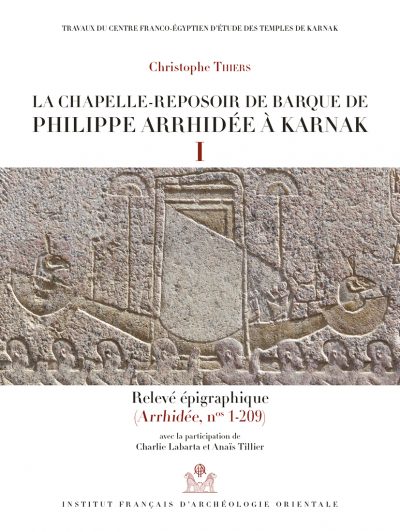
Publication par Chr. Thiers (avec la participation de Ch. Labarta et A. Tillier) : La chapelle-reposoir de barque de Philippe Arrhidée à Karnak

Chr. Thiers, Ch. Labarta, A. Tillier, La chapelle-reposoir de barque de Philippe Arrhidée à Karnak, TravCFEETK, BiGen 60, 2020.
Deux volumes : I- Relevé épigraphique ; II- Relevé photographique (Arrhidée, nos 1-209)

La chapelle-reposoir de barque de Philippe Arrhidée à Karnak

Résumé :

Le monument connu sous le nom de chapelle-reposoir de Philippe Arrhidée est l’édifice en granite bâti dans la zone centrale du temple d’Amon-Rê à Karnak. Reposoir permanent de la barque divine, il occupe le même emplacement que la chapelle-reposoir de Thoutmosis III, insérée dans le complexe du « Palais de Maât » construit sous le règne d’Hatchepsout. Dégagée des blocs effondrés et partiellement reconstruite par Georges Legrain au début du XXe siècle, la chapelle a été restaurée et sa polychromie fixée lors de travaux entrepris par le CFEETK en 1992-1993. Avec la reprise du programme de relevés épigraphiques et photographiques (2010-2017), la publication longtemps retardée de cet emblématique monument construit au cœur d’Ipet-sout peut désormais être proposée.

The monument known as Philip Arrhidaeus’ bark-shrine is the granite chapel built in the central area of the Temple of Amun-Re in Karnak. As a permanent resting place for the divine bark, it is located at the same place as the bark-shrine of Thutmose III, inserted into the complex of the “Palace of Maat” built during the reign of Hatshepsut. Cleared and partially rebuilt by Georges Legrain at the beginning of the 20th century, the chapel was restored and its colors fixed during work undertaken by the CFEETK in 1992-1993. With the resumption of the epigraphic and photographic survey programme (2010-2017), the long-awaited publication of this emblematic monument built in the heart of Ipet-sut can now be proposed.

– Pour le sommaire et l’avant-propos voir ce lien.

– Voir également le site de l’IFAO (éditeur).

– La chapelle-reposoir de Philippe Arrhidée sur le portail des archives.

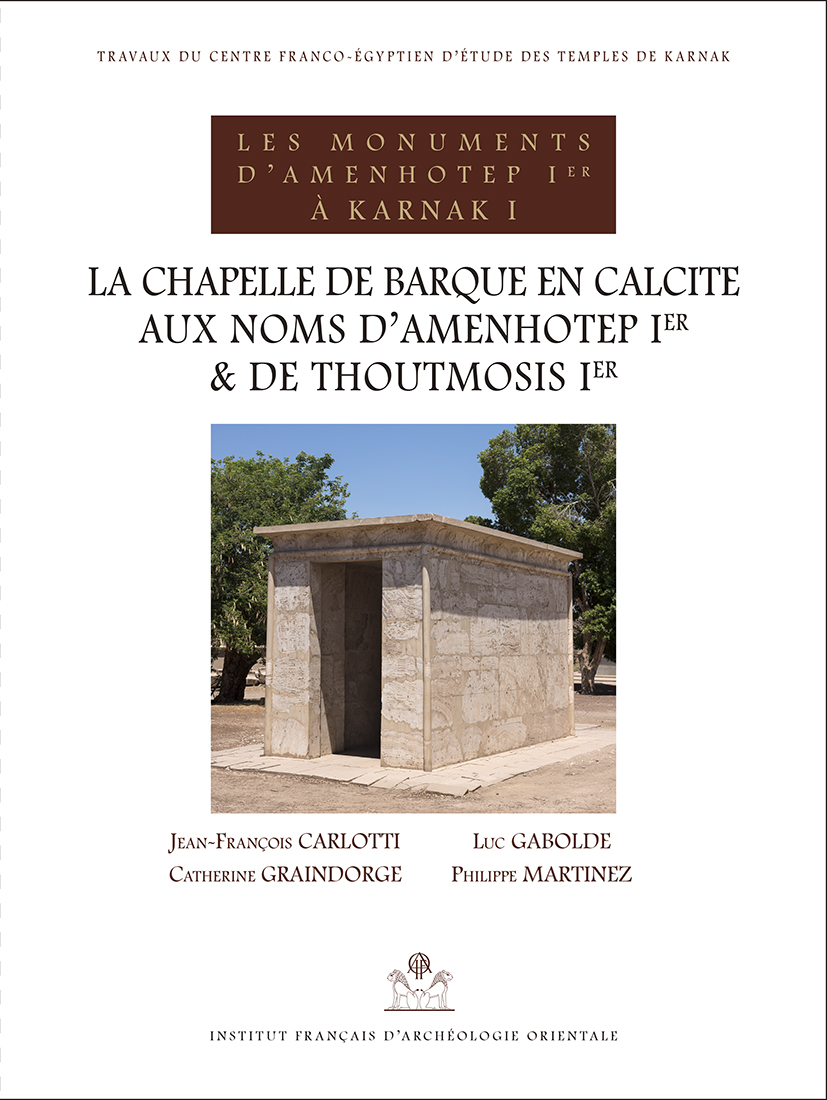
J.-Fr. Carlotti, L. Gabolde, C. Graindorge, Ph. Martinez, La chapelle de barque en calcite aux noms d’Amenhotep Ier et de Thoutmosis Ier, TravCFEETK, BiGen 58, 2019

Chapelle Calcite Amenhotep IerJ.-Fr. CARLOTTI, L. GABOLDE, C. GRAINDORGE, Ph. MARTINEZ, La chapelle de barque en calcite aux noms d’Amenhotep Ier et de Thoutmosis Ier, TravCFEETK, BiGen 58, 2019

(Publication égyptologique de l’IFAO)

Premier volume de la série consacrée aux monuments d’Amenhotep Ier à Karnak, la publication de la chapelle en calcite aux noms d’Amenhotep Ier et de Thoutmosis Ier est l’aboutissement d’un long processus scientifique initié avec la découverte des premiers blocs dans les fondations du môle sud du IIIe pylône en 1914, poursuivi avec la reconstruction en 1947 du monument dans le musée de plein air, en passant par les dessins successifs des parois et leur documentation photographique, et s’achevant par la présente édition en fac-similés, assortie d’une traduction commentée. La chapelle en calcite est un reposoir pour la barque processionnelle d’Amon lors de ses fêtes à exode. On hésite encore sur son emplacement d’origine : soit à l’intérieur de la « cour de fêtes » de Thoutmosis II, soit là où se dressera plus tard le « siège d’intronisation d’Amon », proposition qui a notre préférence. Son décor fut repris quasiment à l’identique dans les autres reposoirs de barque en calcite du site. Les rites spécifiques adressés à la barque d’Amon sont pour partie ceux consignés dans le Rituel d’Amenhotep Ier connu par les p.BM 10689 (Chester-Beatty IX) et les p.Caire CGC 58030, p. XI + p.Turin, Inv. Suppl. 10125, et qui portent à juste titre le nom de « service pour les offrandes de la fête d’Amon-Rê ».

First volume of the series dedicated to the Monuments of Amenhotep I at Karnak, the publication of the calcite chapel in the names of Amenhotep I and of Thutmose I materialises the achievement of a long scientific process initiated by the discovery in 1914 of the first blocks in the foundations of the southern tower of the IIIrd pylon. Followed in 1947 the reconstruction of the monument in the open air museum. Successive phases of drawings and photographic documentation were then implemented and finally the publication of the present edition comprising fac-similes, translations and comments. The calcite chapel is a bark repository for the god’s portable bark during Amun’s procession festivals. Its original location is still debated: either inside the festival courtyard of Thutmose II, or the place where the “inthronisation seat of Amun” was later erected (the latter has our preference). Its decoration was later duplicated in most of Karnak’s calcite bark shrines. The specific rituals addressed to the bark of Amun are partly those recorded in the “Ritual of Amenhotep I” known throughout the p.BM 10689 (Chester-Beatty IX) and the p.Cairo CGC 58030, p. XI + p.Turin, Inv. Suppl. 10125 and which, quite a-propos, bear the name of “offering service for the festival of Amun-Ra”.

هذا الكتاب هو المجلد الأول من السلسلة المخصصة لآثار أمنحتب الأول بمعبد الكرنك. وقد جاء النشر العلمي للمقصورة المشيدة من الحجر الجيري والمكرسة لأمنحتب الأول ولتحتمس الأول تتويجًا لعملية بحث علمي طويلة بدأت عام 1914 باكتشاف الكتل الأولى لأساسات البرج الجنوبي للصرح الثالث وفي عام ١٩٤٧ تم استكمال الأعمال بإعادة بناء الأثر في المتحف المفتوح بالكرنك. وعن طريق مراحل متتالية من التوثيق بالرسومات والتصوير الفوتوغرافي التي تم تنفيذها انتهينا إلى هذا الإصدار الحالي متضمنًا لتسجيل نسخة رسومات طبق الأصل (الفاكسيمل) وترجمة للنصوص مع التعليقات. وهذه المقصورة المشيدة من الحجر الجيري هى استراحة لقارب موكب الإله آمون خلال مواكب الاحتفالات. ومازال الموقع الأصلى للمقصورة موضع جدل بين رأي يميل إلى داخل فناء الإحتفالات الخاص بتحتمس الثاني وآخر يرى أنه المكان الذي أقيم فيه لاحقًا مقعد تتويج الإله آمون وهو الرأي المرجّح لدينا. تكررت زخارف المقصورة فيما بعد – بشكل مماثل تقريبًا – في الإستراحات الأخرى لقارب الحجر الجيري بالكرنك. ويُعد جزء من الطقوس الخاصة بقارب آمون هي تلك المسجلة في كتاب طقوس أمنحوتب الأول المعروفــــة من خلال

p.Caire CGC 58030, p. XI + p.Turin, Inv. Suppl. و 10125 p.BM 10689 (Chester-Beatty IX)

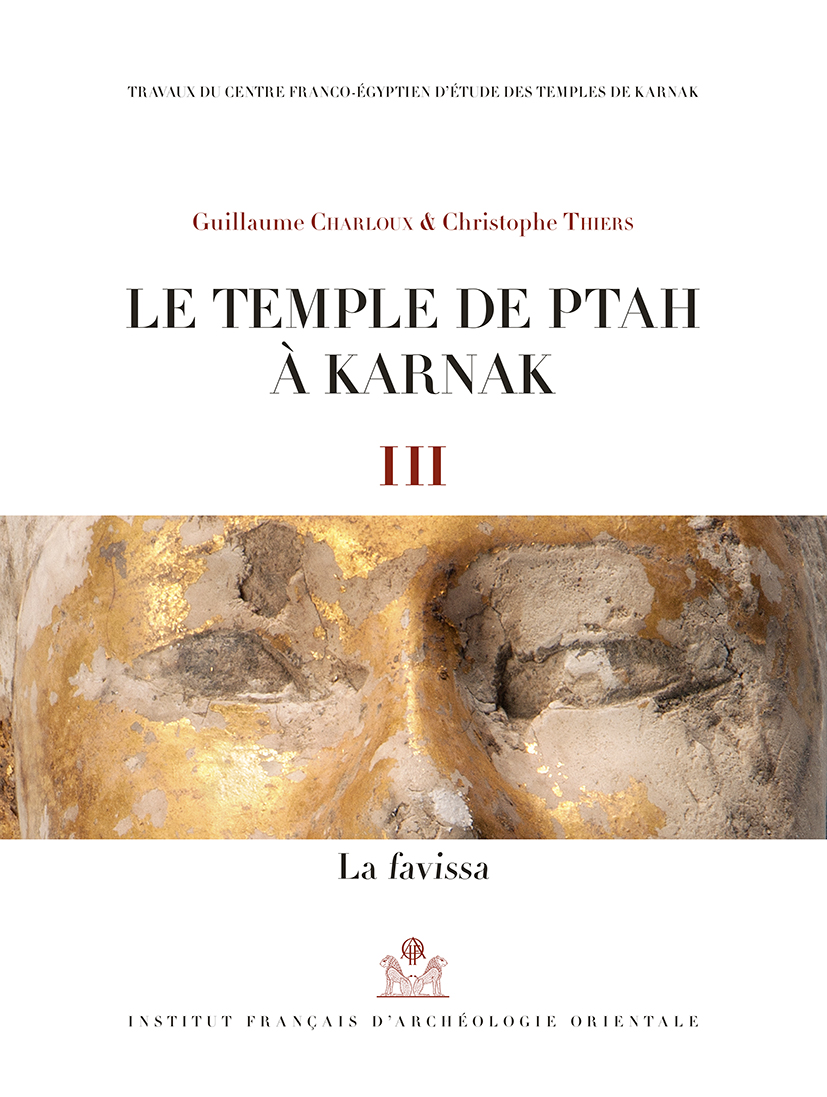
G. CHARLOUX, Chr. THIERS, Le temple de Ptah à Karnak III. La favissa, TravCFEETK, BiGen 55, 2019

favissa Ptah Charloux ThiersG. CHARLOUX, Chr. THIERS, Le temple de Ptah à Karnak III. La favissa, TravCFEETK, BiGen 55, 2019

(Publication égyptologique de l’IFAO).

En décembre 2014, les fouilles entreprises à proximité du temple de Ptah à Karnak ont mis au jour une favissa, à savoir une fosse comblée d’objets, creusée à quelques mètres à l’arrière du sanctuaire de la divinité. La fosse contenait trente-huit objets mobiliers, statues, statuettes et éléments d’appliques statuaires, en calcaire, grauwacke, alliage cuivreux et fritte égyptienne, parfois recouverts d’or. La visualisation et l’analyse du comblement de la favissa ont été rendues possibles grâce à l’apport des méthodes modernes de relevés photogrammétriques et de modélisation 3D. Creusée à la fin de l’époque ptolémaïque, la fosse a servi à abriter une statue « déclassée » du dieu Ptah datant du Nouvel Empire, entourée d’éléments mobiliers et de nombreux bronzes osiriens, la plupart des objets remontant à la Troisième Période intermédiaire et à la Basse Époque (XXVe et XXVIe dynasties notamment). L’analyse et l’interprétation du comblement conduisent, dans cet ouvrage, à s’intéresser aux caches sacrées égyptiennes dans leur ensemble et à envisager le présent dépôt comme le témoignage de l’inhumation d’une statue du dieu Ptah dans le cadre de rituels osiriens.

In December 2014, excavation near the temple of Ptah in Karnak uncovered a favissa –a pit filled with objects– dug a few meters behind the shrine of the god. The pit contained thirty-eight objects, statues, statuettes and statuary elements, in limestone, greywacke, copper alloy and Egyptian frit, sometimes gilded. The visualization and analysis of the favissa filling has been made possible by the use of modern photogrammetric survey, and 3D modeling methods. Dug at the end of the Ptolemaic Period, the pit housed a New Kingdom broken statue of the god Ptah, surrounded by religious artefacts and many Osirian bronzes, most of the objects dating back to the Third Intermediate Period and the Late Period (especially 25th and 26th Dynasties). The analysis and the interpretation of the data lead, in this volume, to look at the Egyptian sacred caches as a whole, and to consider the present deposit as a testimony of the burial of a statue of the god Ptah in an Osirian ritual context.

في ديسمبـر 2014، كشفت أعمال الحفائر بمحيط معبد بتاح عن خبيئة ‐ عبارة عن حفرة مُلئت بلقى ‐ حُفرت على بعد أمتــار قليلة خلف مقصورة الإله، وتحوي هذه الحفــرة عدد 38 من اللقى المتنوعة: تماثيل مختلفة الأحجام وعناصر من تماثيل من الحجر الجيري ومن حجر الجريواك وسبائك النحاس بالإضافة إلى الفيانس المصري وفي بعض الأحيان تكون هذه اللقى مذهبة. لقد أصبح من الممكن تصور وتحليل هذه الخبيئة باستخدام المسح التصويري الحديث والنماذج ثلاثية الأبعاد. حفرت هذه الخبيئة في نهاية العصر البطلمي، وحوت على تمثال مكسور للإله بتاح من عصر الدولة الحديثة أحيط بعدد من اللقى الأثرية وكثير من التماثيل البرونزية الأوزيرية، ومعظم هذه اللقى يؤرخ لها بعصر الانتقال الثالث والعصر المتأخر(خاصة الأسرتين 25 و26). إن تحليل وتفسير البيانات في هذا الكتاب يرشدنا إلى الأخذ بعين الاعتبار الخبايا المصرية المقدسة ككل واعتبار المحتوى الحالي كدليل على دفن تمثال الإله بتاح في سياق الطقوس الأوزيرية.

Liens :
> Sommaire : Sommaire / Summary
> Site du CFEETK : http://www.cfeetk.cnrs.fr/publication/charloux-thiers-le-temple-de-ptah-a-karnak-iii-la-favissa-travcfeetk-2019/
> Site de l’IFAO : http://www.ifao.egnet.net/publications/catalogue/9782724707441/

Achèvement de la mise en ligne de la Chapelle-reposoir de Philippe Arrhidée

La chapelle-reposoir de Philippe Arrhidée : http://sith.huma-num.fr/karnak/2610

L’ensemble des inscriptions hiéroglyphiques de ce monument avec translittération et bibliographie de référence, la documentation photographique ancienne ainsi qu’une nouvelle couverture photographique haute définition complète sont disponibles dans le projet Karnak. Reposoir permanent de la barque divine, il occupe le même emplacement que la chapelle-reposoir de Thoutmosis III, insérée dans le complexe du « Palais de Maât » construit sous le règne d’Hatchepsout. Longtemps considérée comme une copie fidèle de l’édifice de Thoutmosis III, la chapelle-reposoir de Philippe Arrhidée, bien qu’étant largement inspirée par la construction thoutmoside, présente des spécificités notables.

The Bark-shrine of Philip Arrhidaeus is now fully available online

Begun in 2014, the online publication of the scenes and inscriptions of the Chapel of Philip Arrhidaeus is now complete. All hieroglyphic inscriptions of this monument with transliteration and bibliography, old photographic documentation as well as a new complete high definition photographic survey are available in the Karnak project. As a permanent repository for the divine bark, it is located in the same place as the chapel of Thutmosis III, which was inserted into the complex of the “Palace of Maât” built during the reign of Hatshepsut. Long considered as a faithful copy of the Thutmosis III building, Philip Arrhidaeus’s chapel, although largely inspired by the Thutmoside construction, has some remarkable features.

Cahiers de Karnak 17 : date limite d’envoi des articles fixée au 31 mars 2019

The dead-line for submitting a paper is postponed to March 31th 2019. To participate, you must give a principle agreement by email (luc.gabolde@cnrs.fr).

Les textes doivent impérativement être saisis sans aucune mise en page au format .doc ou .rtf (Times 11 pour le texte courant, Times 9 pour les notes). Les documents graphiques seront fournis au format Illustrator et/ou TIFF/JPG. Le texte et les documents graphiques seront envoyés par email, accompagnés d’une version au format .pdf. Un résumé rédigé en anglais est également demandé.